Follow the Sharp Money: How to Read Line Movement Before the Crowd Catches On
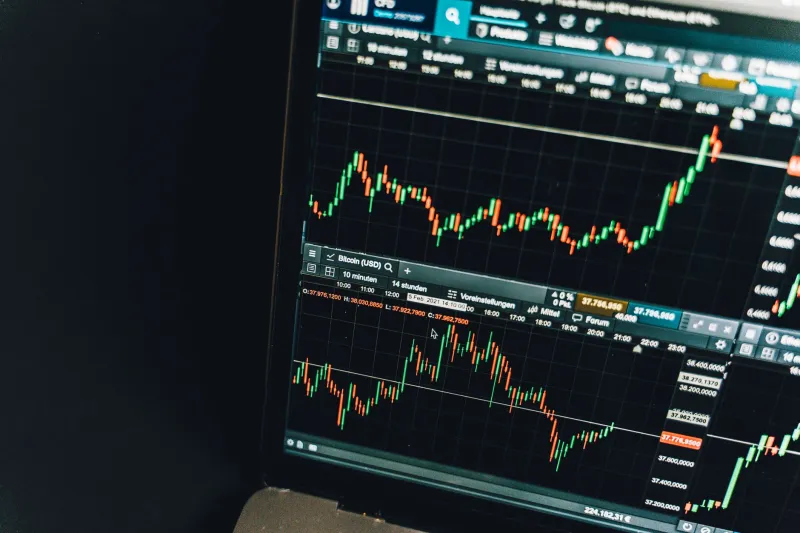
If you've ever noticed that a spread you liked at -3 somehow became -5 by game time, you've already seen sharp money at work. You just didn't know what you were looking at. That two-point swing wasn't random, and it wasn't the sportsbook making a mistake. It was the market reacting to professional bettors telling it something you hadn't figured out yet.
Understanding how and why lines move — and more importantly, learning to distinguish sharp action from public noise — is one of the most practical skills you can develop as a bettor. It won't make you a millionaire overnight, but it will absolutely stop you from betting into the wrong side of the market on a regular basis.
How Lines Are Set and Why They Move
Let's start at the beginning. When a sportsbook opens a line, they're not trying to predict the exact outcome of a game. They're trying to set a number that splits the betting public roughly in half — equal action on both sides means the book collects the vig regardless of who wins.
But books don't always get it right on the first try. And even when they do, the market isn't static. As money flows in, the line adjusts. That adjustment is the signal. The question is: who's doing the betting that's causing the shift?
Generally speaking, line movement comes from two sources:
- Public money — casual bettors, fans, and recreational players who bet based on name recognition, recent performance, or just general popularity. Think: betting the Cowboys because they're the Cowboys.
- Sharp money — professional or syndicate bettors placing large, informed wagers based on deep research, proprietary models, or identified market inefficiencies.
These two groups don't move lines the same way, and learning to tell them apart is where the real skill comes in.
What Reverse Line Movement Actually Means
Here's the concept that separates informed bettors from the crowd: reverse line movement.
Normal line movement makes intuitive sense. Team A gets 70% of public bets, so the line moves toward Team A. Supply and demand. Easy.
Reverse line movement is when the line moves against the public betting percentage. Team A is getting 70% of tickets, but the spread is actually moving toward Team B. That's not the public doing that. That's sharp money hitting Team B hard enough — in large enough dollar amounts — to push the line in the opposite direction of where most bets are landing.
When you see that pattern, pay attention. The books respect sharp action more than volume. A single $50,000 bet from a known sharp syndicate will move a line faster than 500 casual $100 bets from recreational players. That asymmetry is the whole game.
Tools You Can Use to Track This in Real Time
You don't need a proprietary trading desk to monitor line movement. Several publicly available tools give retail bettors a real window into what's happening:
Bet percentages and money percentages. Sites like Action Network and ESPN BET Insights show both the percentage of tickets on each side and the percentage of money on each side. When ticket percentage and money percentage diverge sharply — say, 60% of tickets on Team A but 65% of money on Team B — that's a strong signal that larger bettors are on the opposite side of public opinion.
Opening line vs. current line tracking. Tools that show the full line history from open to present let you visualize exactly when sharp money hit and how much it moved the number. A line that opens at -3, jumps to -4 early in the week, then gets bet back to -3.5 by Friday tells a specific story about competing forces in the market.
Steam moves. This term refers to sharp, coordinated action that hits multiple books simultaneously, triggering rapid line movement across the board. Steam moves are the clearest indicator that professional money is moving with urgency. When you see a line shift half a point or more across several books within minutes, that's steam.
How to Actually Use This Information Without Overthinking It
Knowing the theory is one thing. Applying it without falling into new traps is another. A few practical guidelines:
Don't blindly tail sharps. Sharp money is more informed than public money, but it's not infallible. Syndicates lose. The goal isn't to copy every move — it's to use sharp action as one signal in a broader decision-making process.
Look for confluence. The strongest situations are when your own research agrees with what sharp movement is telling you. If you independently like Team B, and the line is moving toward Team B despite heavy public action on Team A, that's meaningful confirmation. One signal alone is data. Two signals pointing the same way is a reason to act.
Timing matters. Early week sharp action (Monday/Tuesday for NFL) often reflects the most informed takes, before injury reports, weather, and public narrative muddy the waters. Lines that move early and then stabilize often reflect genuine sharp positioning. Lines that move sharply on game day are more likely driven by injury news or late public money.
Avoid chasing steam after the fact. If you notice a line already moved three points, the opportunity has likely passed. The value was at the opening number, not after the market has already priced in the information.
The Bigger Picture: Market Literacy as a Betting Skill
Most recreational bettors treat the line as a fixed obstacle — something to bet against or bet into without much thought. Sharp bettors treat it as a living data source that's constantly telling you something about where the smart money is positioned.
You don't have to become a professional handicapper to benefit from this. You just have to start asking a simple question every time you look at a line: Why is it here, and where did it come from?
The answer won't always be obvious. But the habit of asking it will put you miles ahead of the bettor who just fires at whatever number is in front of them.
Bet smarter. The market is talking. Start listening.